Archeological Evidence
Archaeological surveys and excavations in the Line Creek Valley over the past 150 years have revealed significant evidence of Indigenous knowledge, lifeways, innovative technologies, traditions, and enduring relationships with the land and sky.
Within a one-mile radius of the Frank Vaydik / Line Creek Park, 29 archaeological sites have been previously recorded. Of these, nine are located partially or entirely within the Park boundaries.
The earliest recorded archaeological excavation associated with the site occurred in 1870, when Indigenous human remains were removed and later placed in the care of the Peabody Museum. In 1937, human remains were excavated and later placed in the care of the Smithsonian Institution.
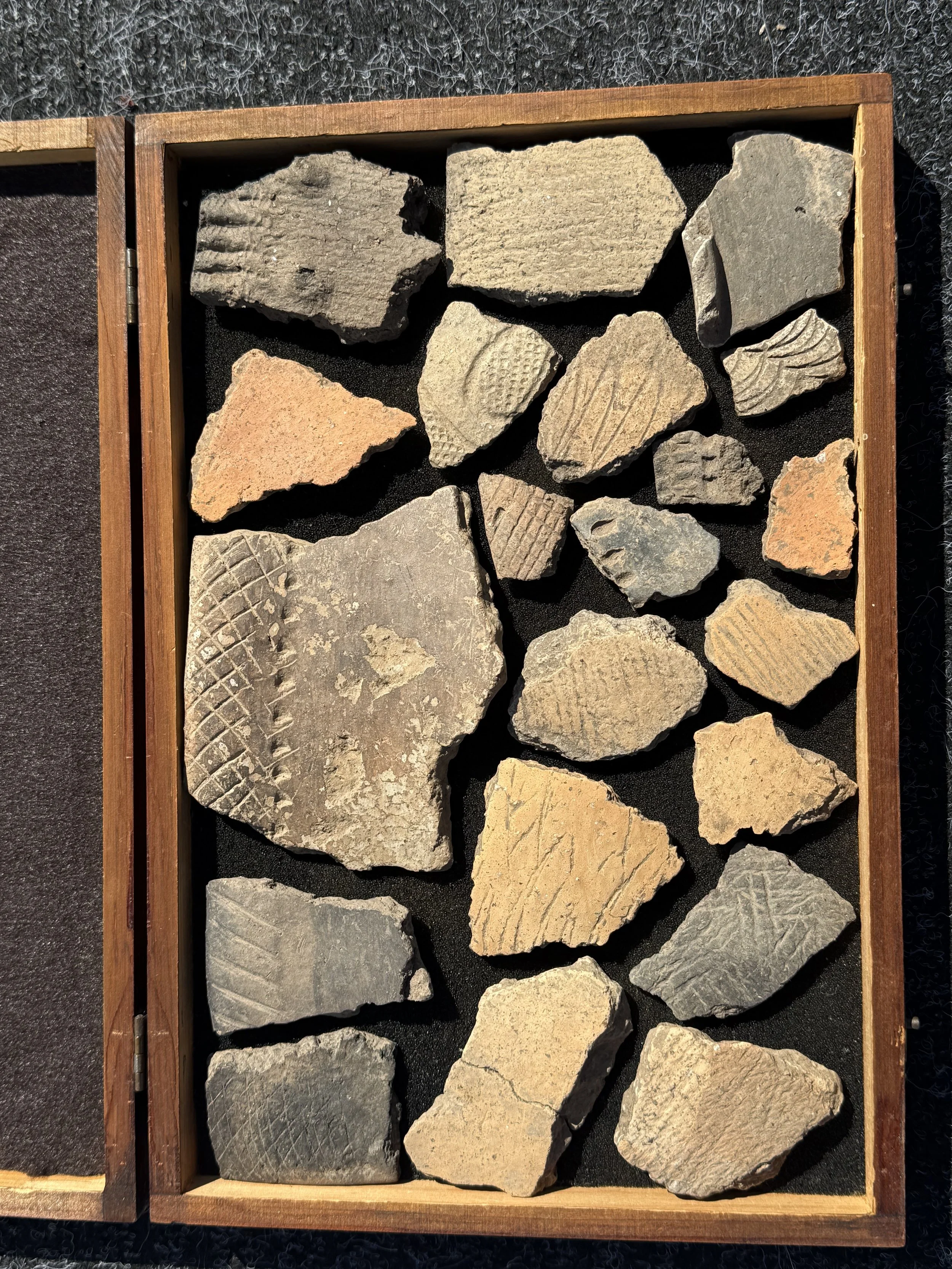
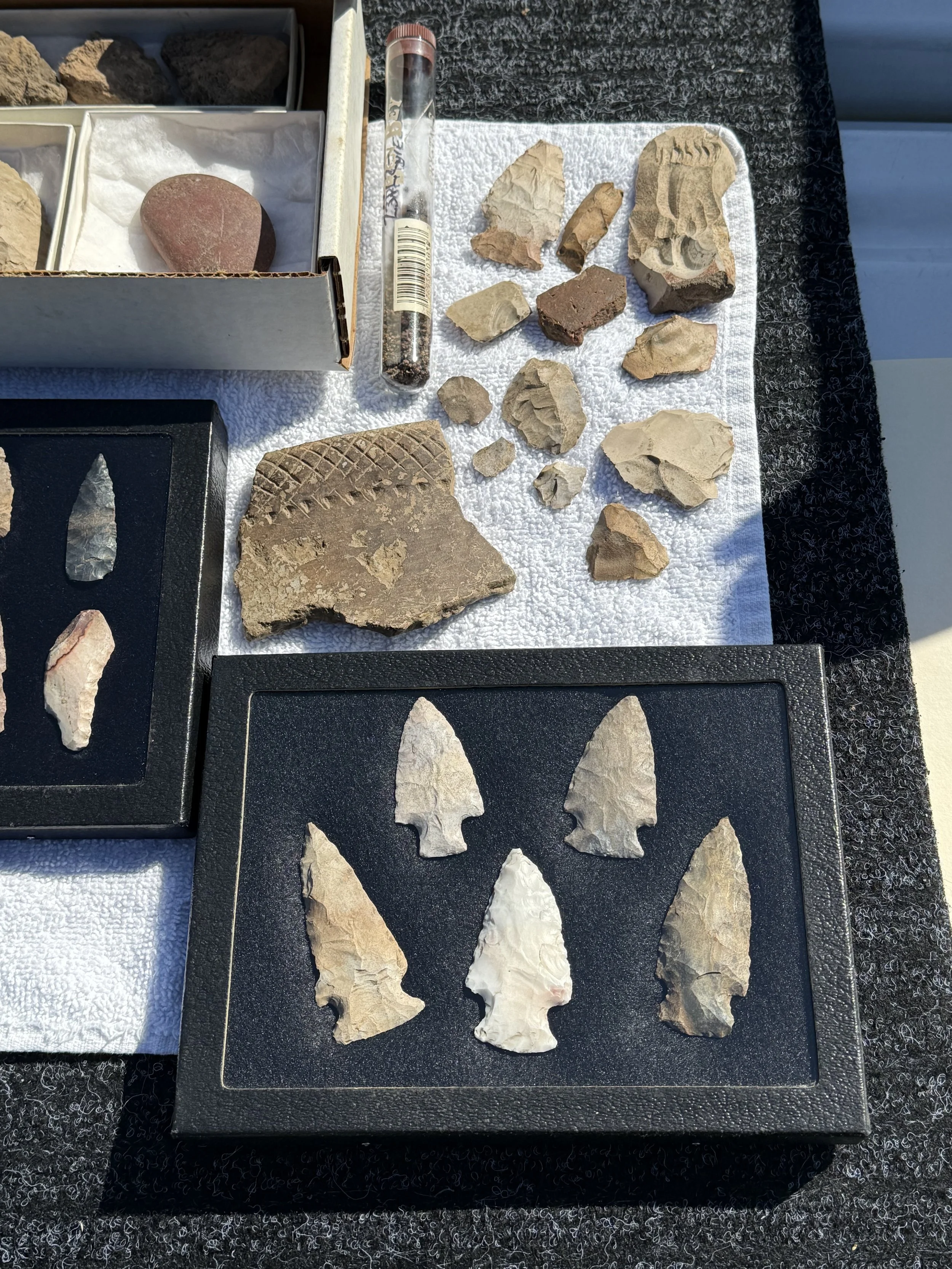
Between 1964 and 1994, extensive archaeological investigations were conducted by the University of Missouri and the University of Kansas, along with members of the Missouri Archaeological Society and the Kansas City Archaeological Society. Over the years, thousands of artifacts have been recovered, including ceramic pottery, pottery fragments, chipped and ground stone tools, bone tools, and faunal remains.
These materials are believed to be held by several institutions and public agencies, including:
University of Kansas Museum of Anthropology
University of Missouri Museum of Anthropology
The Museum of Kansas City
The St Joseph Museum
The Kansas City Parks and Recreation Department